WE BUY SURPLUS ELECTRICAL WIRE IN NORTHEAST KANSAS
State offices in Topeka, laboratories in Lawrence, campus buildings in Manhattan and federal posts at Leavenworth all replace cable on a schedule. The reels left over are what we buy.
Northeast Kansas buys wire institutionally. A state agency, a university department or a federal post does not order to the nearest foot; it orders against a specification, with an allowance for waste, and the surplus goes into a storeroom when the job closes. That pattern repeats from Topeka along the Kansas River to Lawrence and north to Leavenworth.
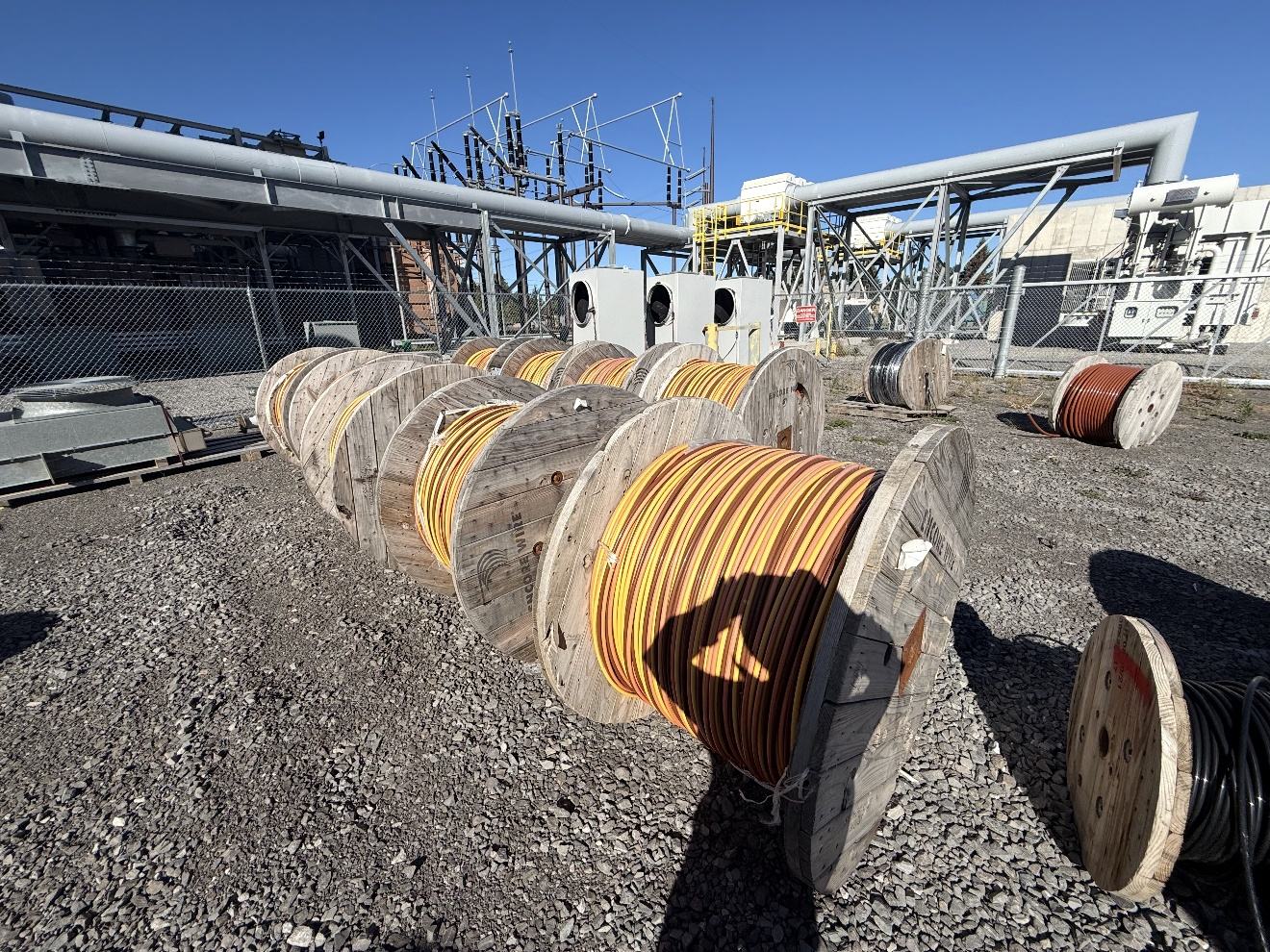
We buy that surplus, and the smaller lots that contractors generate while working for those institutions. Photographs of the reel tags and the jacket print are enough to start. Collection is arranged from the building, the shop or the yard, and the offer stays inside wire and cable.
State buildings, campuses and the slow replacement cycle
Topeka runs on buildings that were wired decades ago and are upgraded a floor at a time. Riser replacements, panel changes and lighting retrofits happen in occupied buildings under tight windows, and the material list is written before anyone knows how much cable the corridors will actually take. The difference between the two figures is a part reel looking for a home.
Agency stores are another source. When a department consolidates space or moves to a new lease, the shelves are cleared and the cable goes with the furniture to surplus property. Reels of number 12, boxes of MC and coils of grounding conductor turn up in that process, usually with tags intact and footage written on the flange.
Kansas purchasing rules mean the paperwork matters more than the wire. If a state account is involved, have the item description and the quantity to hand. We are buying the material, not the contract, but matching the two makes the conversation short.
Lawrence, Manhattan and the research bench
University towns produce a particular kind of surplus: small, specific and expensive per foot. Laboratories are rebuilt between grants, instruments are moved, clean rooms are re-certified, and the cable that fed the old layout is often shielded, twisted or rated for plenum space. A single box of that material can be worth more than a pallet of building wire.
Lawrence and Manhattan also carry the ordinary load of a growing city. Student housing turns over, restaurants change hands, and new buildings go up on the edges. Each of those jobs leaves the usual residue of MC, THHN and SER, and each of them typically ends with a truck taking the short ends back to a shop that has no room for them.
If the cable came out of a lab, say what it fed. Instrumentation and control cable, thermocouple extension, communication and fire-alarm cable are all in scope, and a photograph of the print on the jacket is usually more useful than the purchase order it arrived on.
- Shielded and twisted-pair instrumentation cable from lab rebuilds.
- Plenum-rated cable from clean rooms and ceiling cavities.
- Fire-alarm and low-voltage cable in part boxes.
- Ordinary building wire from housing and restaurant fit-outs.
Fort Riley, Fort Leavenworth and federal specifications
Federal work brings its own cable and its own rules. Projects at Fort Riley and Fort Leavenworth run on specifications that call for particular jacket compounds, particular listings and particular documentation, and the contractor who finishes a package often holds material that cannot be used on the next one because the spec changed.
That material is worth pricing rather than storing. Coils of number 8, reels of armored cable and boxes of specialty cord are common, and they usually come with the original labels still attached. Where the material has been accepted into a government store, make clear that it has left the site and is now in your possession before it is offered.
Leavenworth town itself adds civilian work on top of the post: older housing, a downtown of stone buildings, and a correctional facility that keeps maintenance crews busy. Cable from that work is ordinary commercial stock, and it is bought the same way as anywhere else in the region.
| Site | County | Cable that usually comes out |
|---|---|---|
| Fort Riley | Riley and Geary | Armoured and control cable from facility work |
| Fort Leavenworth | Leavenworth | Service and distribution cable from building renewal |
| University of Kansas | Douglas | Lab, instrumentation and classroom cable |
| Kansas State University | Riley | Lab, utility and building wire from upgrades |
| State office buildings, Topeka | Shawnee | Riser, panel and lighting cable from retrofits |
Rail, river and the ice that finds the weak joint
The Kansas River has flooded this corridor repeatedly, most memorably in 1951, and buildings near the water still carry the marks. When a floodplain building is repaired, the electrical work is often a full replacement rather than a patch, and the removed cable arrives at the roll-off in mixed condition. Some of it is salvageable; all of it needs sorting before it can be priced.
Winter is the other force. Ice storms in the river valley load trees and overhead services until something gives, and the repair work that follows generates short lengths of service cable, URD and temporary feeder. Those lengths accumulate in line trucks and shops through the season.
Rail matters for a different reason: Topeka grew as a railroad town and still carries main lines through the valley, with yards and signals that need constant attention. Signal and communication cable from that work is a small, steady stream, and it is bought alongside the larger building-wire lots.
- Service drops replaced after an ice storm.
- URD from water, sewer and line extensions.
- Signal and communication cable from yard work.
Old reels in a storeroom: what still prices
A reel that has sat in a heated storeroom for six years is usually in better shape than one that spent a summer outside, and it is priced accordingly. Look at the jacket before assuming the worst. Chalky surface, cracking at the bend and flattened sections are the things that matter; dust is not.
Where the tag has been lost, the jacket print decides everything. Size, voltage rating, temperature rating and the listing marks are molded into the sheath at intervals, usually within a few feet of the exposed end. Photograph that section and the reel flange together.
For anything over 5 kV, do not unwrap the reel to show us the cable. The outer serving and the concentric neutral are part of the value, and a reel that has been opened in a damp building loses some of it. A photograph of the tag and the end cap is enough.
Send tag photographs and footage to saleselectricalbuyers@gmail.com, or call +1 (614) 715-3047. Tell us which building the reels are in, how they can be reached and whether a dock or lift is available.
Local pages
Cities in Northeast Kansas
Straight answers
QUESTIONS FROM NORTHEAST KANSAS
Can you buy cable that a state agency has declared surplus?
Yes, once it has left the agency's control and is in yours or in a surplus sale you have won. Send the item description and a photograph of the reel tag. We buy the cable, not the contract, so the paperwork needs to show you hold the material.
Do you handle laboratory cable with shielding and drain wires?
That is squarely in scope. Instrumentation, shielded, twisted-pair and communication cable are all bought, including part boxes. Photograph the print on the jacket and the box label, and note the approximate length left on each item.
Is cable from a flood-damaged building worth quoting?
Sometimes. Cable that was submerged in dirty water is usually a poor risk, but cable stored above the water line in the same building is unaffected. Separate the two before sending photographs, and say plainly which reels were wet.
How do you collect from a campus or a secure federal site?
Access is arranged by the site, not by us. Tell us what gate, badge or escort is needed and whether a dock is available. Material usually has to be moved to a loading point before a vehicle can reach it.
Do you take the old panels and disconnects along with the wire?
No. The offer is wire and cable only. Breakers, panels, transformers and switchgear are outside it, and mixing them into a load only delays the quote on the cable that is in scope.
Request a quote
TELL US WHAT YOU HAVE
Send the details and photos of the reels. A tag photo and a jacket photo answer most of our questions, so you do not have to measure anything twice.
- Wire and cable only: no transformers, switchgear, breakers, MCCs, generators or machinery.
- Full reels, partial reels, spools, coils and boxed stock all welcome.
- Statewide Kansas pickup arranged after we agree on the load.
- Prefer to talk it through? Call +1 (614) 715-3047.
SELL YOUR SURPLUS WIRE IN NORTHEAST KANSAS
Send the tag photos and we will price the lot, partial reels included.